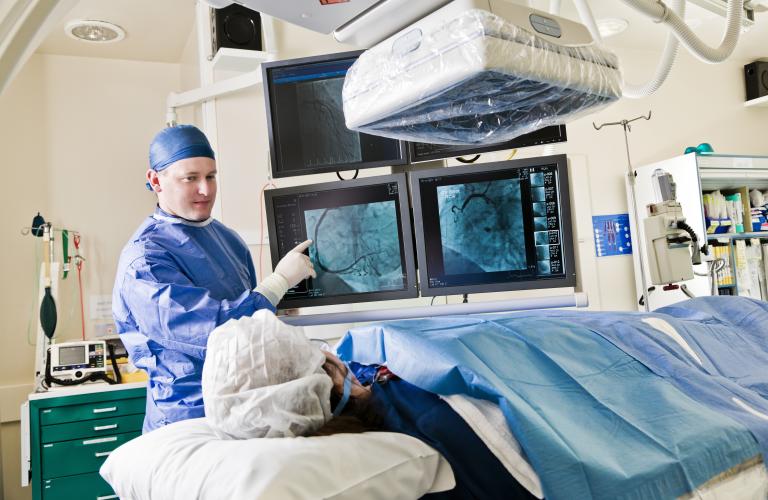
Generally scheduled as outpatient, hospital based procedures when done electively. Heart catheterizations are invasive tests performed to examine your heart’s structure, function and evaluate for blockages in the arteries that supply blood to the heart. A thin tube or catheter, about the size of an IV, is inserted at your wrist (or occasionally groin) into an artery that leads to your heart. Contrast dye is injected, and X-ray images show the dye as it flows through the heart’s arteries.
During the procedure your doctor may be trying to:
● Look for narrowed or blocked coronary arteries
● Stent blocked segments of your coronary arteries (to open up the passage for better blood flow)
● Check the pressures in the four chambers of the heart
● Evaluate the heart’s pumping ability
● Look for defective valves
● Look for congenital or acquired defects, such as a hole in the heart or other abnormal structures Even if patients end up getting a stent placed, this is done through similar catheters, and people tend to be discharged home a few hours later.
HOW TO PREPARE FOR YOUR HEART CATHETERIZATION
• Do not eat or drink anything after midnight the night before your procedure, other than water/medications as directed.
● Do not take metformin from the day before the procedure
● Have a discussion with your doctor specifically about blood thinners such as Eliquis, Pradaxa, Xarelto, Coumadin (warfarin), Edoxaban
● Generally, you will need to continue aspirin, Brilinta (ticagrelor), Effient (prasugrel), Plavix (clopidogrel)
• Take all other medications as prescribed unless told otherwise. You should bring an updated list of medications or your medication bottles with you to the hospital.
• Make sure you discuss any allergies, especially iodine/X ray dye, latex or rubber products, medicines like penicillin/other antibiotics with your doctor and/or nurse.
• You will be required to have someone drive you home after the procedure since you will have been given sedative medication during the procedure.
 Back
Back
 (706)850 3795
  Patient Portal Login